Moratorium Notice: PSU RERC is not accepting new ethics applications until further notice.

Moratorium Notice

The Palawan State University Research Ethics Review Committee (PSU RERC) is temporarily placing a moratorium on the acceptance of new research ethics applications until further notice.

This is due to the expiration of our Level 1 Accreditation granted by the Philippine Health Research Ethics Board (PHREB). The committee is currently working to comply with the requirements for Level 2 Accreditation. During this period, PSU RERC will not accept new ethics review applications until the Level 2 accreditation has been granted.

Researchers are advised to seek ethical review and approval from other accredited Research Ethics Committees (RECs) while the accreditation process is ongoing.

Please note that post-approval reports for previously approved protocols must still be submitted to our official email to ensure the continued monitoring of approved studies.

For inquiries or clarifications, you may contact us at:
psurerc@psu.palawan.edu.ph

We sincerely apologize for any inconvenience this may cause and thank you for your understanding and cooperation.
Home About Resources Contacts

RESEARCH ETHICS REVIEW COMMITTEE

Ensuring Ethical Standards in Research

Categories of Research Ethics Review

Depending on the potential risk level and nature of the study, research projects undergo different types of ethical evaluation. Below are the three main categories:

Exempt Review

Protocols that have human participants but do not involve vulnerable groups (IPs/ICCs, Minor, PWDs, Patients, Elderly) will not create vulnerability, with no more than negligible personally identifying and sensitive data.

Expedited Review

Protocols that do not involve vulnerable groups (IPs/ICCs, Minor, PWDs, Patients, Elderly), will not create vulnerability, and with no more than minimal risks (Physical and Emotional Discomfort).

Full Board Review

Protocols that have human participants involve vulnerable groups/individuals, will create vulnerability, (Undue Influence, Undue Inducement, Coercion, Response Bias, Exploitation), or have more than minimal risks (Medium to High Risks)

Frequently Asked Questions

Find quick answers to common questions about the research ethics review process.

How to submit an ethics review application?

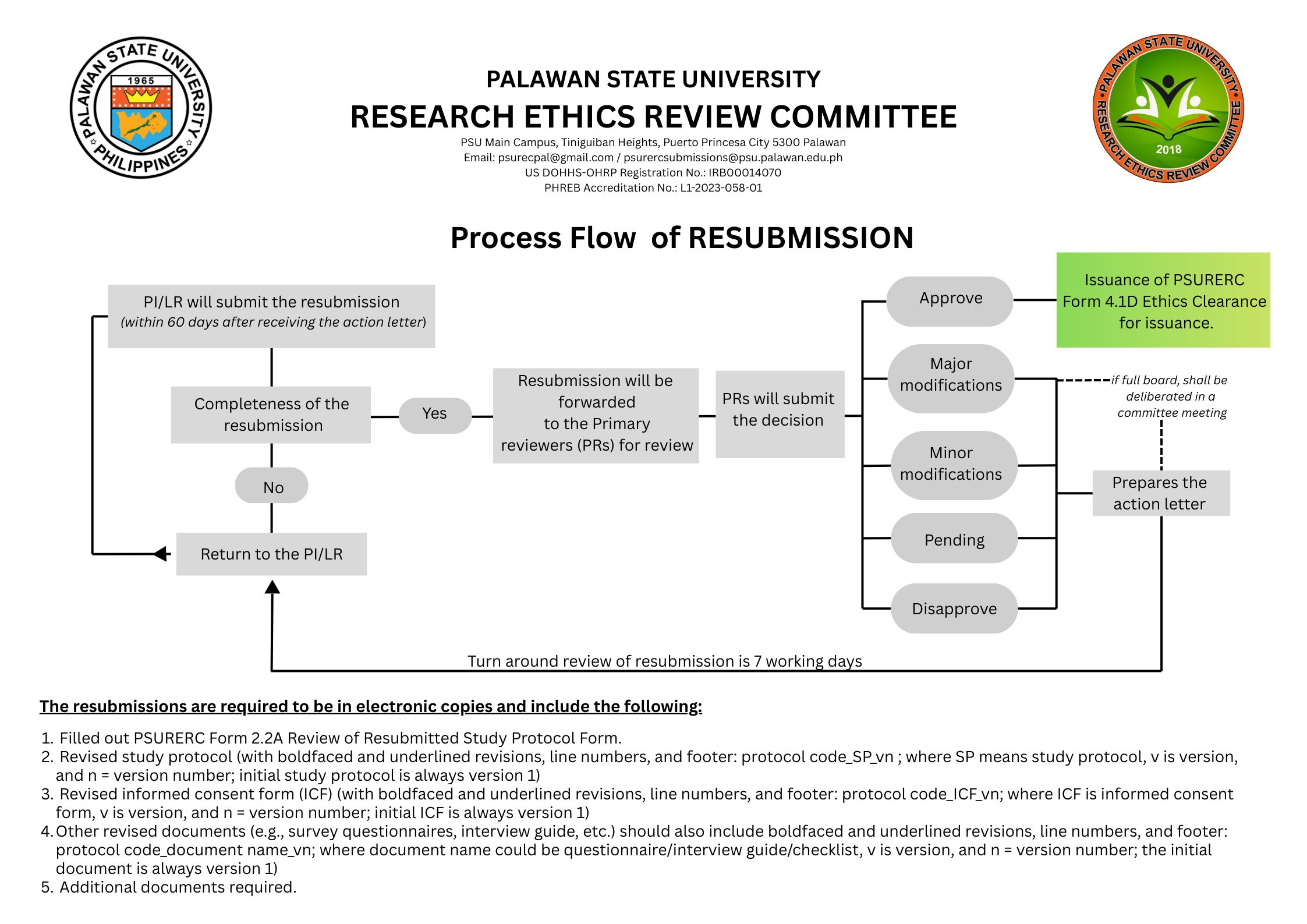
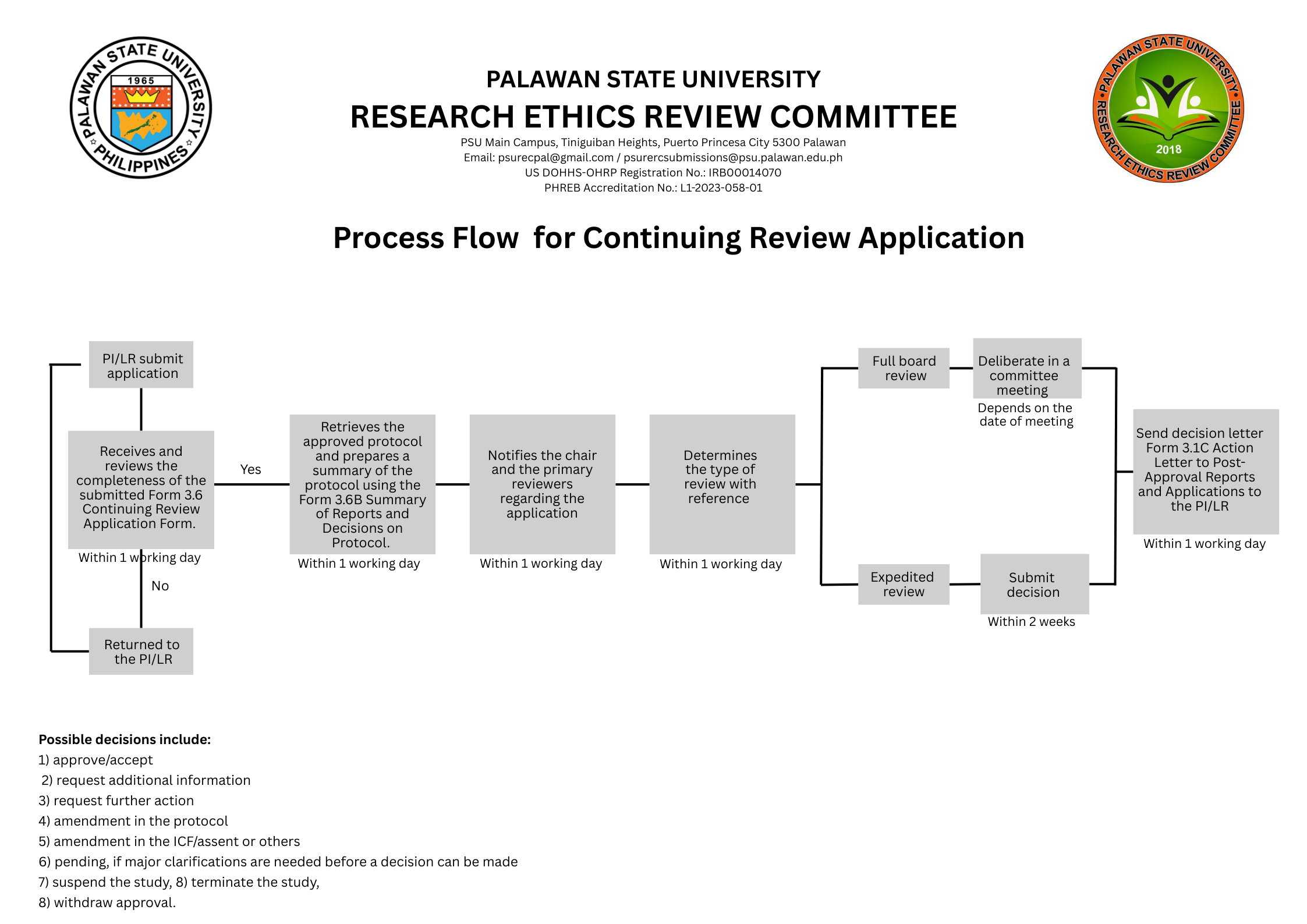
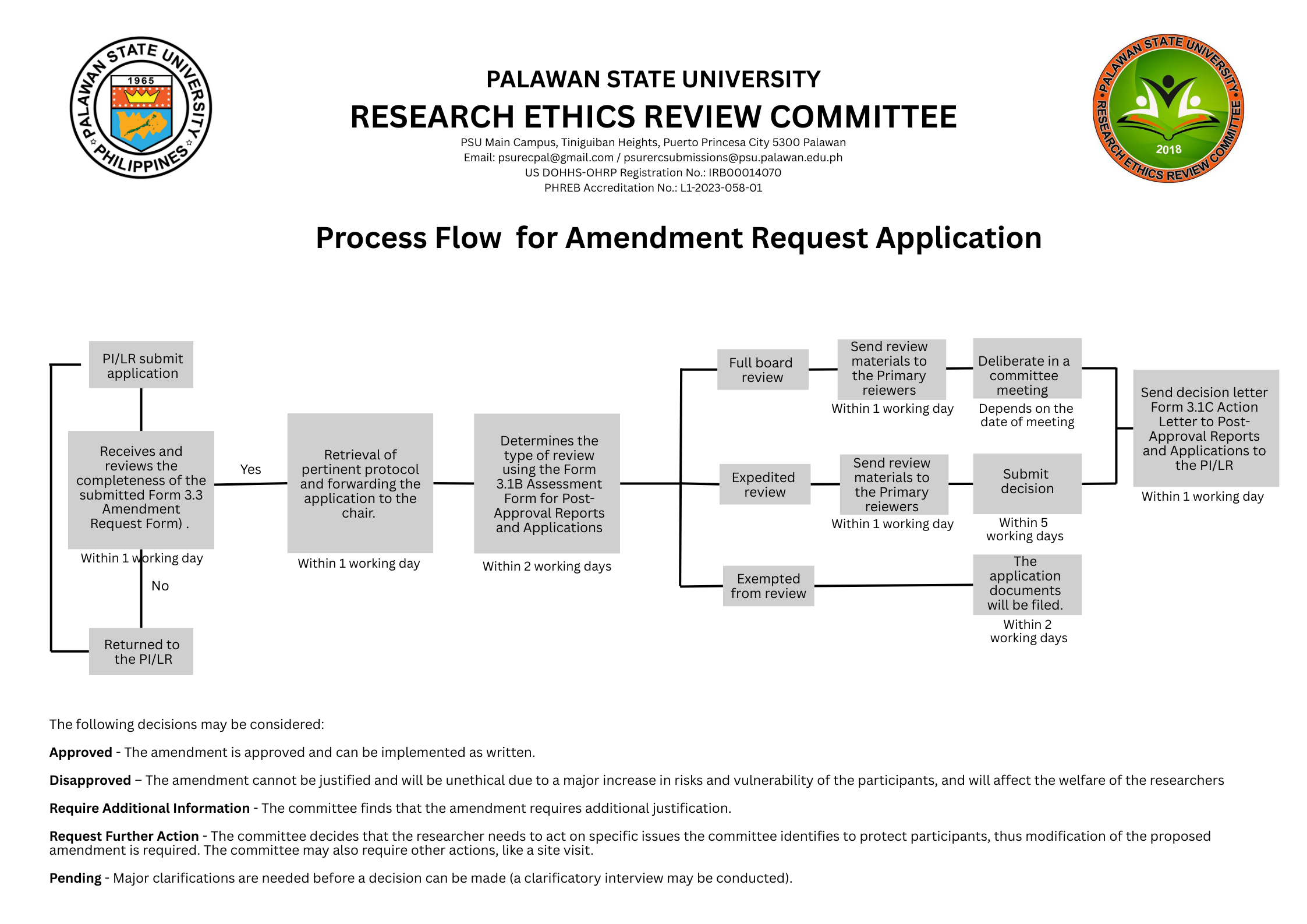
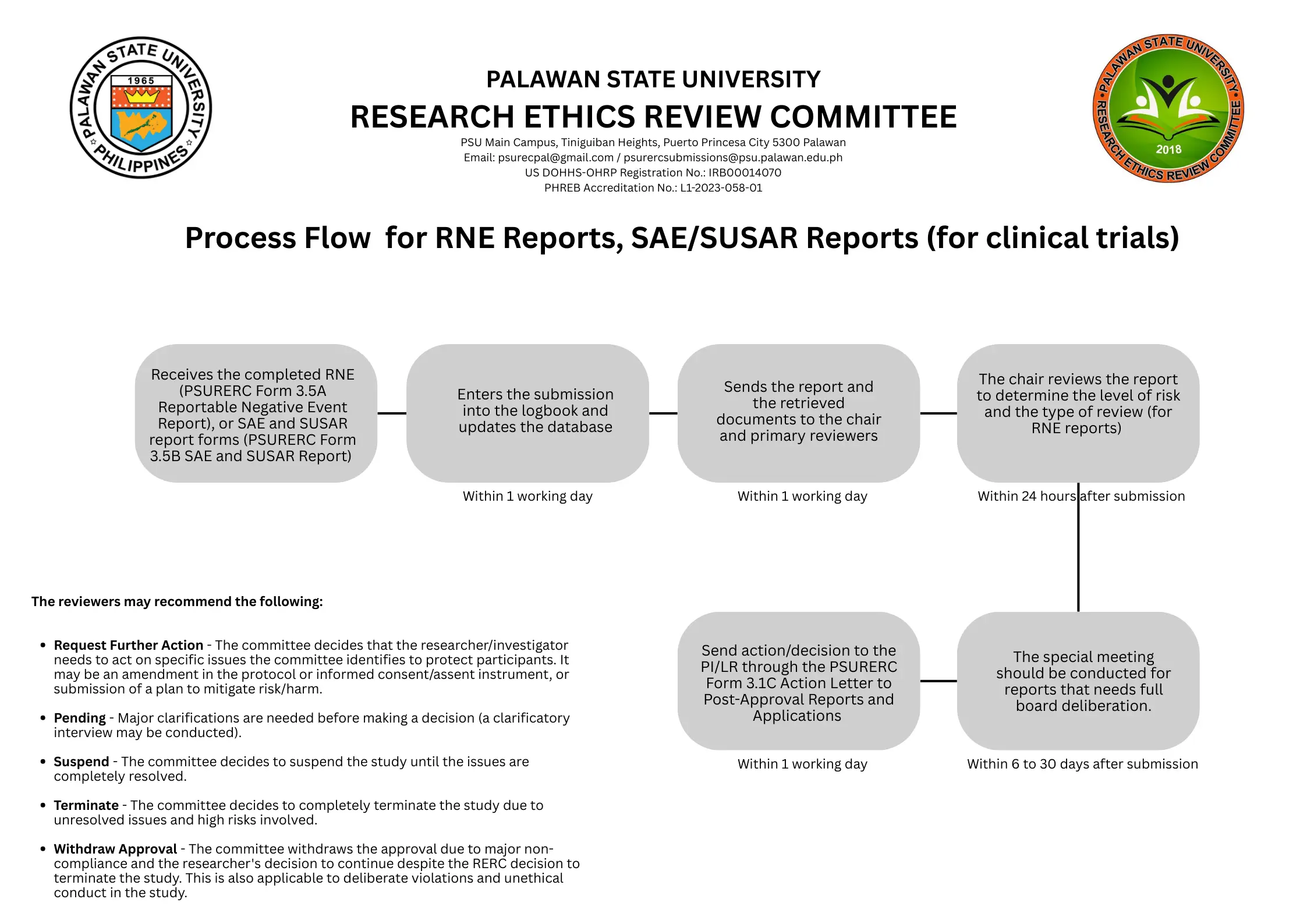
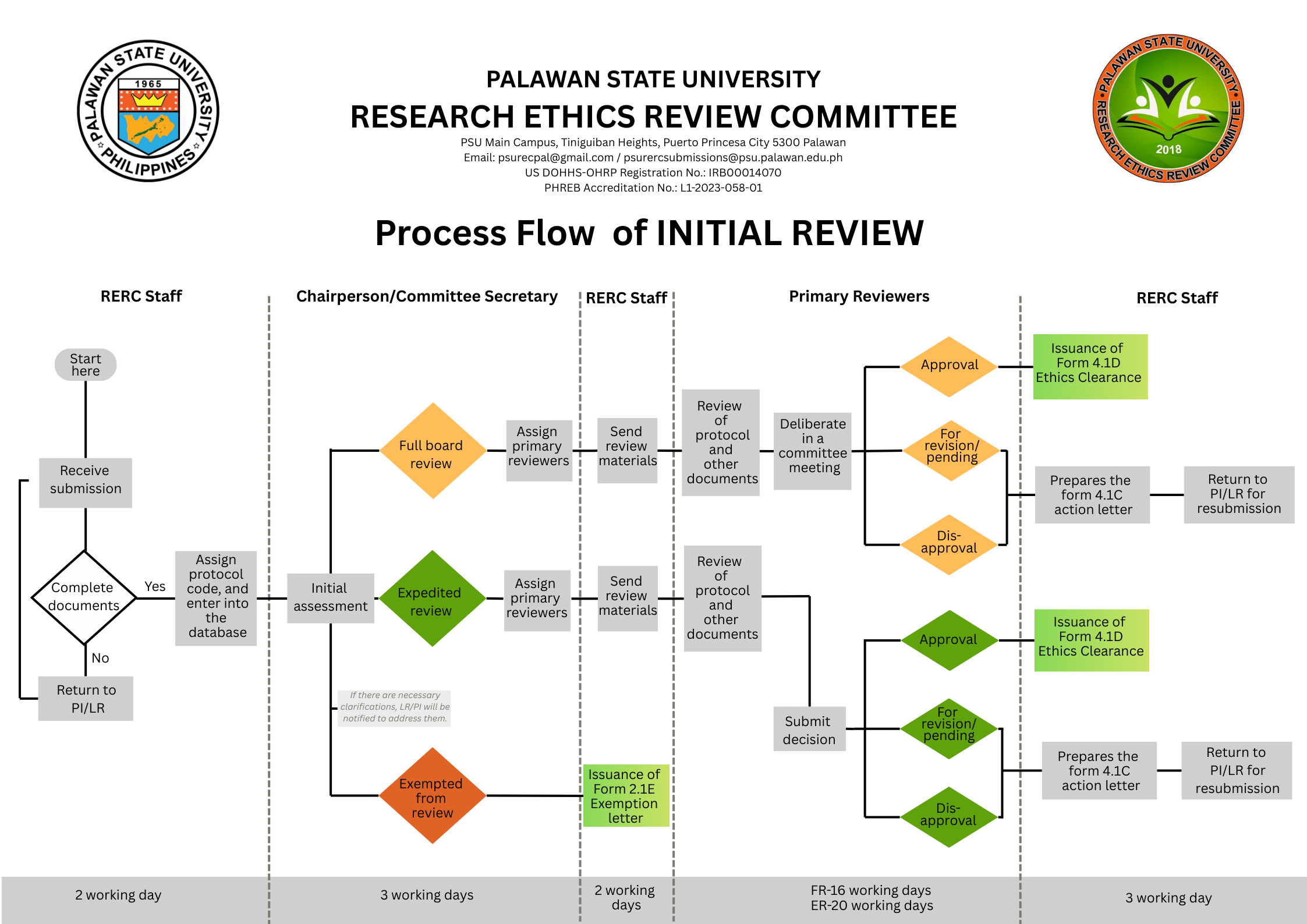
To submit an ethics review application, please refer to our Process Flow diagrams above. The process typically involves preparing your research proposal, completing required forms, and submitting all documents through our designated channels. For detailed step-by-step guidance, review the Initial Review Process Flow in the carousel section.

What are the requirements for an ethics review application?

All required documents and templates can be found in our Resources page. This includes research proposal templates, consent forms, ethics review guidelines, and other necessary documentation. Please ensure all requirements are met before submitting your application.

How much is the review fee?

Review fees vary depending on the type of review required (Exempt, Expedited, or Full Board Review). For current fee structure and payment details, please contact our office directly at psurercsubmissions@psu.palawan.edu.ph or visit our Contacts page for more information.

How much time will it take to review?

Review timelines are indicated in our Process Flow diagrams above. The duration depends on the type of review: Exempt reviews are typically processed fastest, Expedited reviews take moderate time, while Full Board reviews require the most comprehensive evaluation period. Specific working days are detailed in each process flow diagram.

What are the studies that could be exempted from an ethics review?

Studies that may qualify for exemption typically include research involving negligible or no risk to participants, such as studies using publicly available data, certain educational research, or research involving normal educational practices. However, exemption determination is made on a case-by-case basis. Please consult with our committee for specific guidance on your research project.